
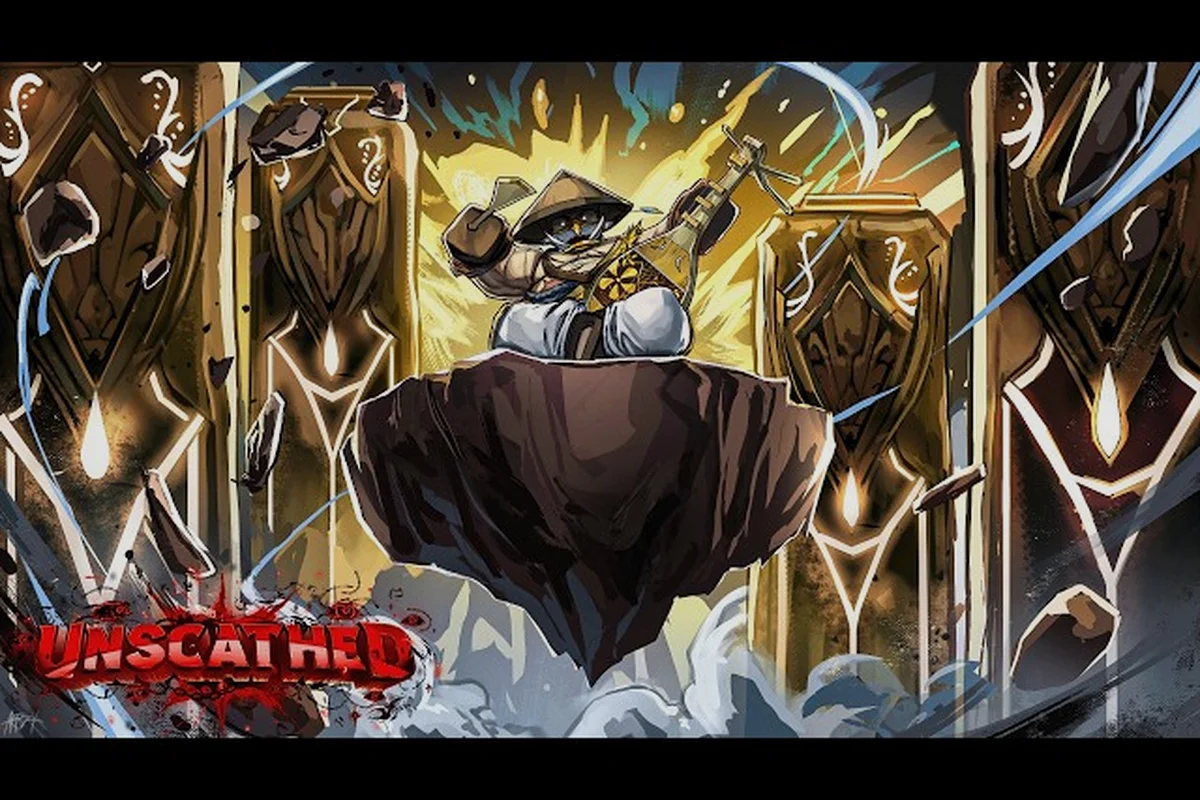
Dojo PvP is where Unscathed separates casual aura collectors from actual fighters, and this Unscathed PvP guide gives you the exact combat framework you need to climb the leaderboard. While rolling rare auras and farming bosses builds your account power, the Dojo tests how well you understand critical strikes, aura elements, and positioning under pressure. Most players enter their first duel with a strong aura and lose anyway because they ignore the mechanics that actually decide fights. This battle guide breaks down the full PvP system, from queueing into your first match to advanced counter-picking strategies that veteran players use to dominate the ranked ladder.
The PvP Arena Ruleset Explained
The Dojo serves as Unscathed's dedicated player-versus-player arena, and it operates completely differently from the PvE content in Story Mode. When you enter the Dojo, you queue into a 1v1 battle against another player with similar matchmaking rating, and each fight runs on a timed round system where you must deplete your opponent's health bar before the clock expires. According to the official Unscathed page on Roblox, the game markets itself as the first Aura RNG battling experience, which means your aura choice directly shapes your combat capabilities rather than just serving as a cosmetic flex.
The core loop of Dojo PvP revolves around three distinct phases that repeat every round: a brief preparation window where you lock in your loadout and study the opponent’s kit, an engagement phase where positioning and cooldown trading decide the tempo, and a resolution phase that forces a decisive outcome—either a kill or a retreat to reset. Understanding this cycle is critical because it dictates when to pop your defensive cooldowns; for example, holding your parry until the resolution phase punishes overly aggressive opponents who waste their burst early. Master this rhythm, and you’ll consistently outlast rivals who treat every round as a mindless brawl, turning the Dojo’s tight arena into a chess match where patience wins more fights than raw damage.
-
Engagement phase — both players close distance and probe with light attacks to bait reactions
-
Burst phase — the player with the critical strike advantage commits to a heavy combo while their opponent is recovering
-
Disengage phase — the losing player uses dodges and defensive auras to reset the neutral game
Each round lasts 60 seconds, and if neither player falls, the round goes to the player with the higher remaining health percentage. This scoring rule matters more than most new players realize, because it means you can win rounds by playing defensively once you have a health lead. The Dojo also features a best-of-three format for ranked matches, which rewards players who can adapt their strategy between rounds rather than relying on a single gimmick. Community reports from the official Unscathed Discord indicate that the matchmaking system pairs you based on your PvP rating, which starts at 1000 and adjusts by roughly 25-30 points per match depending on the rating gap between opponents.
How to Queue Into Your First Dojo Match
Getting into your first Dojo fight requires reaching Act 2 in Story Mode, because the Dojo NPC only appears after you complete the second act's boss encounter. Once unlocked, you can access the Dojo from the main hub area through a blue portal near the blacksmith. The queue system typically finds an opponent within 10-30 seconds during peak hours, though wait times can stretch to several minutes during off-peak periods. Before you queue, make sure your loadout is locked in, because the game uses your currently equipped aura, gems, and potions for the fight.
Your PvP loadout consists of four main components that all contribute to your combat effectiveness: your primary weapon, secondary weapon, tactical gear, and armor modifications. Each piece plays a distinct role—your primary handles sustained damage, while your secondary covers close-range emergencies when you’re forced to reload mid-fight. Tactical gear, like smoke grenades or medkits, can swing a duel by creating cover or restoring health, and armor mods dictate your survivability against specific damage types. Neglecting any one of these leaves a glaring weakness that experienced opponents in Dojo matches will exploit, so balance them around your preferred playstyle rather than stacking raw power.
-
Aura — determines your element, base stats, and unique combat skill
-
Gems — socketed into your weapon to provide stat bonuses and set effects
-
Potions — consumable buffs that activate at the start of each round
-
Skill tree allocation — passive bonuses that persist across all game modes
The Dojo also has a practice mode where you can fight a training dummy to test damage numbers and combo timing without risking your rating. This is invaluable for learning your aura's attack animations and figuring out which combos actually connect against a moving target. If you are new to the system entirely, the game modes guide explains how the Dojo fits into the broader progression loop alongside Story Mode and the Battle Pass.
Maximizing PvP Damage With Critical Hits
The single most important combat mechanic in Unscathed PvP is the critical strike system, because critical hits deal roughly 150% of normal damage and can swing a round in seconds. Every attack you land has a base chance to critically strike, and that chance is modified by your critical rate stat, which comes from gems, certain auras, and skill tree nodes. Understanding how to stack critical rate efficiently is the difference between dealing consistent pressure and occasionally chunking your opponent for massive damage.
The damage formula works as follows: every hit in Unscathed is calculated by taking your weapon's base damage, multiplying it by your Power stat's scaling coefficient, then applying the target's Armor reduction as a percentage-based subtractor, and finally rolling a random variance of ±10% to simulate combat unpredictability. For example, if your katana deals 150 base damage with a 1.4 Power multiplier against an opponent with 40% Armor, you'll land between 126 and 154 damage per swing—but critical strikes bypass 50% of that Armor, which is why stacking Precision to trigger crits is often more valuable than raw Power in dojo duels. Understanding this sequence lets you prioritize gear stats effectively: against heavy-armor tanks, crit chance outweighs flat damage, while squishy targets demand raw Power to end fights faster.
| Damage Type | Base Multiplier | Critical Rate Modifier | Best Source |
|---|---|---|---|
| Normal hit | 1.0x | None | Consistent DPS |
| Critical hit | 1.5x | 100% critical rate | Burst damage |
| Elemental advantage | 1.25x | Stacks with crit | Aura matchup |
| Elemental disadvantage | 0.8x | Reduces effective damage | Avoid this matchup |
Critical rate can be stacked up to a hard cap of 100%, and once you reach that threshold, every single hit you land will critically strike. However, most builds do not need to hit the cap, because the critical damage multiplier from gems and auras can make even a 40-50% critical rate feel devastating. The key insight reported by players is that critical rate and critical damage scale multiplicatively, so investing heavily in one without the other produces mediocre results. A balanced approach that reaches around 60% critical rate with a 2.0x critical damage multiplier outperforms a lopsided build that hits 100% critical rate with only 1.5x critical damage.
Building the Optimal Crit Build for Dojo Fights
To build an effective critical strike setup for PvP, you need to prioritize gems that grant critical rate early in your progression, because they provide the most reliable stat scaling. The Razor Gem grants 5% critical rate per level, while the Fury Gem grants 10% critical damage per level, and combining these two creates a strong foundation for any damage-oriented build. Your aura choice also matters, since certain auras provide innate critical bonuses that reduce how many gems you need to dedicate to reaching your target critical rate.
The recommended critical build progression follows this order: prioritize weapon crit chance first, then crit damage, and finally crit rate on armor. This sequence ensures your first few hits in a dojo fight land reliably as crits, which is crucial because unscathed pvp hinges on bursting down an opponent before they can retaliate. For example, a 45% crit chance with 150% crit damage outperforms a 25% chance with 200% damage in the opening exchange, since the latter leaves too much to RNG. Following this order also lets you adapt your later slots to defensive stats once your core crit threshold is met.
-
Step 1 — Equip at least two Razor Gems to reach 40-50% base critical rate
-
Step 2 — Add one Fury Gem to boost your critical damage multiplier above 1.8x
-
Step 3 — Fill remaining slots with elemental damage gems that match your aura type
-
Step 4 — Allocate skill tree points into the critical branch for additional scaling
Players who prefer a more defensive approach can instead focus on critical resistance, which reduces the damage they take from enemy critical hits. This stat is particularly valuable in higher ranks where most opponents run critical-heavy builds, and it can effectively neutralize an enemy's entire damage strategy. The Stone Gem provides critical resistance at 3% per level, and stacking three of them reduces incoming critical damage by nearly 30%, which often forces opponents to rethink their approach mid-series.
Best PvP Auras and Counter-Picking Strategy
Choosing the right aura for Dojo PvP is about more than picking the highest rarity option in your inventory, because the elemental matchup system creates a rock-paper-scissors dynamic that can flip a fight regardless of raw stats. Each aura belongs to one of six elements — Fire, Earth, Light, Night, Demon, and Water — and each element deals bonus damage against one specific opposing element while taking reduced damage from another. Understanding this triangle is essential for any serious Unscathed combat guide.
The elemental advantage chart breaks down as follows: Fire beats Wood, Wood beats Earth, Earth beats Water, and Water beats Fire, while Lightning and Metal each counter one another in a cyclical rock-paper-scissors dynamic. This isn't just flavor text—it directly dictates your damage output and survivability in the Unscathed dojo. For example, stacking a Wood-based aura against an Earth-focused opponent can swing a close match by roughly 15-20% in your favor, so memorize this chart before queueing to avoid getting hard-countered.
| Your Element | Strong Against | Weak Against | Best PvP Role |
|---|---|---|---|
| Fire | Night | Water | Aggressive burst damage |
| Earth | Fire | Light | Defensive tanking |
| Light | Earth | Demon | Sustained pressure |
| Night | Water | Fire | Assassin-style burst |
| Demon | Light | Earth | High-risk high-reward |
| Water | Fire | Night | Control and kiting |
Counter-picking in the Dojo works differently than in most games, because you cannot see your opponent's aura before the match starts. Instead, you must adapt during the fight by recognizing your opponent's element from their attack animations and visual effects, then adjusting your playstyle accordingly. If you are at an elemental disadvantage, you need to play more defensively and rely on critical strikes to overcome the damage reduction. If you hold the advantage, you can afford to trade blows aggressively because your effective damage output is significantly higher.
Top Aura Picks for Ranked PvP
The Titan Aura represents the defensive end of the spectrum, offering a damage reduction shield that absorbs a percentage of incoming damage for five seconds. This active skill can completely negate an opponent's burst window, allowing you to survive their critical combo and punish them during their recovery frames. The Void Aura sits in between, providing a teleport dash that lets you reposition instantly and dodge incoming attacks with precise timing. Each of these auras requires a different playstyle, and the best choice ultimately depends on whether you prefer aggressive pressure, defensive patience, or hit-and-run tactics.
For players who want to understand the full ranking of combat auras, the how to win PvP guide provides a detailed tier list that evaluates every aura's PvP viability across different skill levels.
PvP Potions and Gem Loadout Strategies
Potions play a critical role in Dojo PvP because they activate at the start of every round, providing temporary buffs that can shift the momentum of a fight. Unlike PvE content where you can chug potions mid-combat, the Dojo restricts potion usage to one potion per round, activated automatically when the round begins. This limitation means your potion choice must complement your overall build strategy rather than react to the specific opponent you face.
The most effective PvP potions fall into several categories: offensive brews that amplify burst damage, defensive elixirs that mitigate incoming hits, and utility tonics for mobility or status cleansing. In the Unscathed Dojo, for example, pairing a critical-strike potion with a high-crit gem loadout can turn a losing duel into a one-shot combo, while a resistance potion counters the meta fire builds. Knowing which category to prioritize based on your opponent’s loadout is the difference between victory and a swift defeat.
| Potion | Effect | Duration | Best Used With |
|---|---|---|---|
| Lucky Potion | +20% critical rate | 60 seconds | Critical builds |
| Fury Potion | +30% critical damage | 60 seconds | High base critical rate |
| Stoneskin Potion | +25% damage reduction | 45 seconds | Defensive auras |
| Haste Potion | +15% attack speed | 60 seconds | Combo-heavy builds |
| Regen Potion | +5% health per second | 30 seconds | Sustain strategies |
The Lucky Potion is widely considered the strongest PvP option because critical strikes are so impactful in the Dojo, and the extra 20% critical rate pushes most builds into the 70-80% range where critical hits become the norm rather than the exception. However, players running Titan Aura or other defensive setups often prefer the Stoneskin Potion because it amplifies their survivability and makes it nearly impossible for opponents to burst them down. The Haste Potion shines with fast-attacking auras that rely on landing long combos, since the attack speed increase lets you fit more hits into the same stun window.
Gem Socketing Strategy for PvP Success
Your gem loadout provides the passive stat backbone for your PvP performance, and the way you socket gems into your weapon determines your effective combat profile. Each weapon has a limited number of gem slots, typically ranging from three to five depending on the weapon's rarity and upgrade level. Prioritizing which gems to socket requires understanding how different stats interact with your aura's strengths and weaknesses.
The recommended gem priority for PvP builds follows this order: Vitality gems first to survive burst windows, then Critical Resistance to counter crit-heavy opponents, followed by Accuracy to ensure your attacks land, and finally Attack Power for sustained damage. This sequence matters because in the Unscathed dojo PvP arena, a dead player deals zero damage—prioritizing survivability stats early lets you outlast aggressive openers, while stacking pure offense too soon leaves you vulnerable to the meta’s one-shot combos. For example, equipping three Vitality gems before your first match can mean the difference between eating a full katana combo or escaping with 15% HP to retaliate.
-
Critical rate gems — the most impactful stat for burst damage potential
-
Critical damage gems — amplify the value of every critical hit you land
-
Elemental damage gems — increase your base damage output against all targets
-
Health gems — provide survivability against burst-heavy opponents
-
Critical resistance gems — counter enemy critical builds in higher ranks
Players who want to maximize their damage output should aim for a 2:1 ratio of critical rate to critical damage gems, while players who prefer balanced builds can mix in health and resistance gems for better survivability. The exact optimal setup depends on your aura's innate stats, so experimenting with different combinations in practice mode is the best way to find what works for your specific loadout. According to community reports, the critical rate cap of 100% means you should stop adding critical rate gems once you reach that threshold, because any excess is wasted stat budget that could go toward other useful stats.
Advanced PvP Tactics and Positioning (Pvp Guide Focus)
Winning consistently in the Dojo requires more than just having strong stats, because positioning and timing determine whether your attacks actually land against skilled opponents. The arena itself is a circular platform with no obstacles, which means fights come down to spacing, footsies, and punishing mistakes rather than using terrain for cover. Learning to control the center of the arena gives you a subtle advantage, because it limits your opponent's escape options and makes it harder for them to kite you around the edges.
The core positioning principles that separate good players from great players in the Unscathed dojo PvP arena revolve around proactive spacing, not reactive scrambling. While a good player reacts to an opponent's dash, a great player predicts it by holding a line that forces the enemy to burn stamina just to close distance, leaving them vulnerable to your counter-attack. This means constantly angling yourself relative to the dojo's central pillars—using them to break line-of-sight on incoming projectiles while keeping your own escape route open. Mastering this pre-emptive footwork, as detailed in this unscathed combat guide, reduces damage taken by up to 30% in prolonged exchanges and directly sets up the punishing punishes that win rounds.
-
Maintain mid-range spacing — close enough to threaten with your attacks, far enough to react to enemy approaches
-
Bait and punish — intentionally whiff an attack to draw out your opponent's counter, then punish their recovery
-
Corner pressure — push your opponent toward the arena edge to limit their dodge options
-
Patience in neutral — do not commit to attacks recklessly, because whiffing gives your opponent a free punish window
The dodge mechanic is your primary defensive tool, and it grants brief invincibility frames that let you phase through incoming attacks. Mastering the timing of these i-frames is essential, because a well-timed dodge turns your opponent's strongest combo into an opening for your own counter-attack. Most players dodge too early when they see an attack starting, which means the i-frames expire before the attack actually lands. The key is to dodge into the attack at the last possible moment, which requires practice but dramatically improves your defensive capabilities.
Reading Opponent Patterns and Adapting Mid-Fight
Every player develops habits in the Dojo, and learning to read those patterns gives you a significant edge in best-of-three series. Pay attention to how your opponent approaches the neutral game — do they always open with a light attack to test your reactions, or do they prefer to wait and counter? Do they dodge backward when pressured, or do they try to trade hits? These behavioral tells let you predict their next move and punish accordingly.
The adaptation cycle for reading opponents follows this pattern: observe their dominant tendency—whether they favor aggressive pressure, defensive parries, or bait-and-punish spacing—then test a counter-action, and finally confirm the read before committing fully. For example, if an opponent repeatedly opens with a dash-in attack, you can bait that move, sidestep, and punish with a quick combo. This cycle repeats every few exchanges, forcing you to update your mental model as they adapt, which is the core of winning in Unscathed’s dojo PvP.
-
Round 1 — gather information about your opponent's tendencies and preferred combos
-
Round 2 — adjust your strategy to punish their habits and force them into uncomfortable positions
-
Round 3 — counter their adjustments with a new approach that they have not seen yet
Players who can adapt quickly between rounds consistently outperform opponents who rely on a single strategy, even when the opponent has better stats. This is why the best-of-three format rewards versatility and game sense over raw mechanical skill. If you want to improve your fundamentals before jumping into ranked, the Dojo fights guide covers the reward structure and ranking system in detail, including how your performance affects your leaderboard position.
Frequently Asked Questions
What is the best aura for PvP in Unscathed?
The Inferno Aura is widely considered the best PvP aura because its Flame Burst skill deals area damage and applies a burn effect that pressures opponents. However, the Titan Aura counters aggressive playstyles with its damage reduction shield, so the best choice depends on your preferred combat approach.
How do I unlock Dojo PvP in Unscathed?
You unlock the Dojo by completing Act 2 in Story Mode, which grants access to the blue portal near the blacksmith in the main hub. Once unlocked, you can queue into casual or ranked matches, though ranked mode requires reaching level 20 first.
Do potions work in Unscathed PvP?
Yes, but with restrictions. You can equip one potion per round, and it activates automatically when the round begins. The Lucky Potion is the most popular choice because it boosts critical rate by 20%, which significantly increases your burst damage potential.
What is the critical rate cap in Unscathed?
The critical rate cap is 100%, meaning every attack you land will critically strike once you reach that threshold. However, most builds perform better with around 60-70% critical rate combined with high critical damage, because the multiplicative scaling produces higher overall damage output.
How does the PvP ranking system work?
Your PvP rating starts at 1000 and adjusts by roughly 25-30 points per match depending on the rating gap between you and your opponent. Winning against higher-rated players grants more points, while losing to lower-rated players costs more, creating a balanced progression curve.