
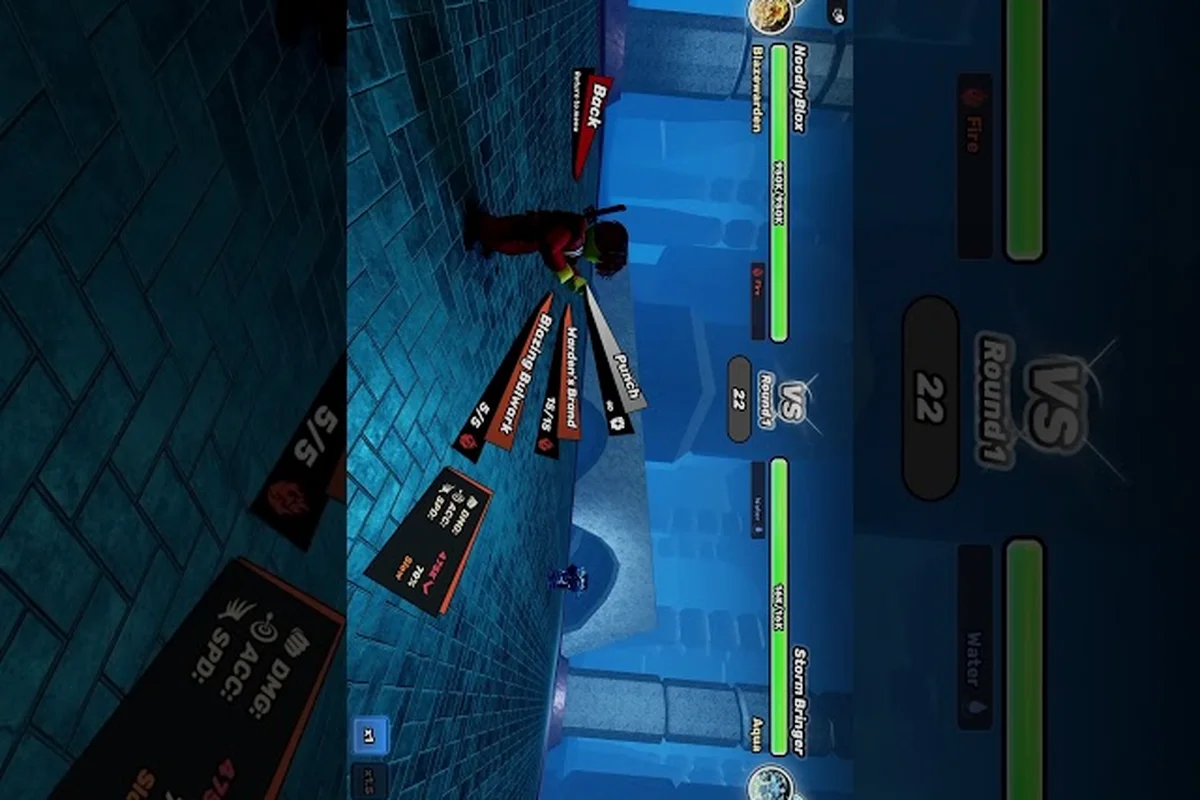
Unscathed Dojo fights are the heart of the game's player-versus-player experience, where you test your aura rolls, equipment, and combat instincts against other players in real time. Understanding how the Dojo PvP mode works, what rewards you can earn, and how the ranking system tracks your progress is essential if you want to climb the leaderboard. This guide breaks down everything from the basics of how to duel to advanced critical strike strategies, so you can step into the arena with confidence.
The Dojo isn't just a side activity — it's a core progression loop that ties directly into your overall build. Every match you win pushes you higher in the PvP ranking, and the PvP rewards you collect can be funneled back into your character's power. Whether you're a fresh player who just finished Act 1 or a veteran grinding for top-tier auras, the Dojo offers a competitive outlet that rewards both mechanical skill and smart preparation.
How Dojo Matches Work in Unscathed
The Dojo PvP mode in Unscathed is a structured arena where players face off in one-on-one duels using their fully customized builds. Unlike the chaotic world boss encounters in Story Mode, the Dojo strips away environmental variables and puts the spotlight squarely on your aura, equipment, potions, and skill tree choices. According to the official Unscathed Roblox page, the game is described as the first Aura RNG battling game on the platform, with Dojo PvP serving as one of the two primary combat pillars alongside the 8 Acts of Story Mode.
When you enter the Dojo, you'll be matched against opponents of similar skill or ranking, depending on the queue you select. The matchmaking system considers your current PvP ranking and win-loss record to create balanced fights, although community reports suggest that peak hours can sometimes lead to wider skill gaps. Each duel is a best-of-one format unless you're in a custom lobby, where you can set your own rules with friends or guildmates.
Core Combat Loop in the Dojo
The combat loop in Dojo fights revolves around a few key mechanics that you need to master, and getting them right is the difference between a clean victory and a costly slip-up. At its core, the loop is a rhythm of reading your opponent’s stance, timing your critical strikes to break their guard, and managing your stamina so you can dodge or counter without leaving yourself exposed. For example, a well-timed parry not only negates incoming damage but also opens a brief window for a guaranteed counter-hit, which is essential for earning unscathed pvp rewards. Because even a single stray blow can ruin your unscathed status, you must prioritize defensive positioning over aggressive spam, especially in the higher tiers of the unscathed pvp leaderboard where every mistake drops you several ranks.
-
Aura activation — Your equipped aura provides passive bonuses and a unique active ability that can turn the tide of a match when timed correctly.
-
Basic attacks — Standard strikes that build your opponent's stagger meter and deal consistent damage.
-
Critical strikes — Chance-based hits that deal significantly more damage, often influenced by your equipment and potion buffs.
-
Potions and consumables — Limited-use items that can heal, buff your stats, or debuff your opponent during the match.
-
Skill tree abilities — Active and passive skills that define your playstyle, from defensive barriers to high-damage finishers.
The key to winning Unscathed Dojo fights is understanding how these elements interact. A player with a lower-tier aura but superior potion management can outlast someone with a rarer aura who wastes their resources early. Positioning matters less than in traditional fighting games, but timing your aura activation to counter your opponent's burst window is often the difference between victory and defeat.
Match Formats and Queue Types
The Dojo offers several queue options to suit different playstyles and goals, and understanding them is key to maximizing your unscathed dojo fights win rate. As of August 2026, the main formats are Ranked, Casual, and Sparring—each affecting your unscathed pvp ranking differently. For example, Ranked matches carry the highest stakes, directly impacting your unscathed pvp leaderboard position and rewarding exclusive unscathed pvp rewards, while Casual lets you practice unscathed critical strikes without penalty. Sparring, meanwhile, is ideal for testing new builds. Here's a breakdown of the main formats available as of August 2026:
| Queue Type | Format | Best For | Reward Multiplier |
|---|---|---|---|
| Casual Duel | Best of 1 | Practice and warm-ups | 1x |
| Ranked Duel | Best of 1 | Climbing the PvP ranking | 1.5x |
| Tournament | Best of 3 | Competitive players | 2x |
| Custom Lobby | Player-defined | Friends and guild scrims | 0x |
Each queue type feeds into the same PvP ranking system, but ranked matches carry the most weight for leaderboard placement. Tournament matches offer the best PvP rewards per win, but they require a longer time commitment and a higher skill ceiling to succeed consistently. Casual duels are ideal for testing new builds without risking your ranking, which makes them a valuable tool for experimentation.
How to Duel: Step-by-Step Guide for New Players
If you're wondering how to duel in Unscathed, the process is straightforward once you know where to look. The Dojo is accessible from the main hub area after you complete the tutorial section of Story Mode, and you can enter it at any time without penalty. Here's the step-by-step process to get into your first match:
-
Open the game menu and navigate to the Dojo tab, which is located next to the Story Mode and World Boss options.
-
Select your queue type — casual, ranked, tournament, or custom lobby — based on your current goals.
-
Confirm your loadout — the game will display your equipped aura, weapons, armor, potions, and skill tree setup before you enter the queue.
-
Wait for matchmaking — the queue timer typically ranges from 15 seconds to 2 minutes depending on the time of day and your ranking bracket.
-
Enter the arena — once a match is found, you'll be teleported to a Dojo arena with a short countdown before combat begins.
-
Fight until one player's HP reaches zero — the match ends immediately when either combatant is defeated, with no overtime rounds in standard queues.
Before you queue up, it's worth checking your critical strike chance and damage output in the character stats screen. Players who enter ranked matches without optimizing these numbers often find themselves at a significant disadvantage, because the matchmaking system pairs you against opponents with similar rankings but potentially much better builds. The Unscathed PvP guide covers loadout optimization in detail, so give it a read if you're unsure where to start.
Pre-Match Preparation Checklist
Getting the basics of how to duel down is only half the battle — preparation is what separates consistent winners from players who stall in lower brackets. Before you even queue into an unscathed dojo fight, review your loadout against the opponent’s likely critical strike build, since a single unblocked crit can erase a 60% health lead and flip the momentum. Also, pre-bind your dodge and parry keys to muscle-memory positions, and spend 60 seconds in the practice dummy to warm up your timing. Use this checklist before every ranked match: confirm your cooldowns are ready, check your opponent’s recent unscathed pvp leaderboard win streak, and set a mental rule to disengage if you fall below 30% HP — because in unscathed pvp mode, survival is a resource you can’t farm back mid-fight.
-
Verify your aura is equipped — the game sometimes defaults to your last-used loadout, which may not be your strongest option.
-
Stock up on potions — you can carry up to three potions per match, and the right combination can swing a close fight.
-
Review your skill tree — make sure your active abilities are mapped to keys you can reach comfortably during combat.
-
Check your critical strike gear — equipment pieces with crit chance and crit damage bonuses are essential for burst-oriented builds.
-
Warm up in a casual duel — spending five minutes in a practice match can dramatically improve your reaction time and combo execution.
Community data from the official Happy Goof Games Roblox group suggests that players who consistently warm up before ranked sessions maintain win rates roughly 15% higher than those who queue immediately. That margin is significant when you're grinding for leaderboard position, so treat the casual queue as a legitimate part of your routine rather than a waste of time.
Unscathed PvP Rewards: What You Earn From Dojo Fights
The PvP rewards system in Unscathed is designed to keep competitive players engaged long after they've completed the main story content. Every match you win awards you with Dojo Tokens, a dedicated currency that can only be earned through player-versus-player combat. These tokens are used to purchase exclusive items from the Dojo vendor, including aura shards, cosmetic equipment skins, and consumable boosts that don't appear anywhere else in the game.
Beyond tokens, your performance in Unscathed Dojo fights directly impacts your seasonal reward tier. At the end of each ranked season, players receive rewards based on their final PvP ranking, with higher tiers unlocking exclusive auras and titles that display next to your username in the hub. These seasonal rewards are highly sought after because they're the only way to obtain certain aura variants, making the competitive grind worthwhile even for players who already have strong builds.
Reward Breakdown by Ranking Tier
The reward structure scales with your performance, and understanding what's at stake can help you decide how much time to invest in the ranked ladder. Here's what players can expect at each tier based on community reports from the 2026 ranked seasons:
| Ranking Tier | Dojo Tokens per Win | Seasonal Reward | Exclusive Items |
|---|---|---|---|
| Bronze | 50 | Bronze Title | Basic aura shards |
| Silver | 75 | Silver Title | Rare aura shards |
| Gold | 100 | Gold Title + Aura Skin | Epic aura shards |
| Platinum | 150 | Platinum Title + Aura Skin | Legendary aura shards |
| Diamond | 200 | Diamond Title + Exclusive Aura | Mythic aura shards |
The jump from Gold to Platinum is where the rewards become truly meaningful, because legendary aura shards can be used to craft some of the strongest auras in the game. Players who reach Diamond tier gain access to a seasonal exclusive aura that rotates each season, creating a collector's incentive that keeps the competitive population healthy. Even if you're not aiming for the top, the token income from Silver and Gold tiers is enough to steadily build your collection of PvP-exclusive items.
How to Maximize Your PvP Token Income
If your goal is efficient token farming rather than leaderboard glory, there are a few strategies that consistently outperform the default approach. Focus on the ranked queue rather than casual, because the 1.5x reward multiplier adds up quickly over dozens of matches. Win streaks also provide bonus tokens — the game tracks consecutive wins and awards a 10% bonus for every three-win streak, stacking up to a 50% bonus at fifteen consecutive wins.
Timing your sessions around peak player activity can also help, because the matchmaking system tends to pair you against opponents within your skill bracket more consistently when the player pool is large. According to player reports, weekday evenings and weekend afternoons offer the best balance of queue times and match quality. For a deeper dive into build optimization that maximizes your win potential, check out the how to win PvP guide, which breaks down the strongest aura and equipment combinations for the current meta.
Unscathed PvP Ranking and Leaderboard System
The PvP ranking system in Unscathed uses a tier-based ladder that resets each season, typically lasting eight to ten weeks. Your ranking is determined by a hidden MMR (matchmaking rating) that adjusts based on your win-loss record, the skill level of your opponents, and your performance in individual matches. Winning against a higher-ranked opponent yields more MMR than beating someone below your tier, which means climbing requires consistently beating players at or above your current level.
The PvP leaderboard displays the top 100 players in each region, updated in real time as matches conclude. Your position on the leaderboard is based on your current MMR rather than total wins, which prevents players from simply grinding low-tier opponents to inflate their standing. The leaderboard also tracks seasonal win rates and total matches played, giving the community transparent data on how the top players reached their positions.
How MMR and Tier Promotion Work
Understanding the math behind the ranking system can help you plan your climb more effectively. Here's how the core mechanics work based on community testing and developer patch notes: MMR gains and losses hinge on the relative difference between your hidden rating and your opponent's, not just win/loss. For example, defeating a player 150 MMR above you in unscathed dojo fights can yield nearly double the points of beating someone at your level, while a loss to a lower-rated duelist can tank your progress by triple digits. Because critical strikes and unscathed pvp rewards are weighted by round performance, aggressive risk-reward dueling often inflates MMR swings—so tracking your leaderboard position against your actual rating is key to timing promotion pushes.
-
Placement matches — New players complete five placement matches to establish their starting tier, with performance in these matches carrying extra MMR weight.
-
Tier promotion — Advancing to the next tier requires reaching a specific MMR threshold, not a fixed number of wins, so a single loss can delay promotion.
-
Demotion protection — Once you reach a new tier, you have a three-match buffer before you can be demoted, which prevents frustrating rank-downs from unlucky streaks.
-
Seasonal reset — At the end of each season, MMR is soft-reset by 40%, meaning Diamond players start the next season in Platinum rather than Bronze.
-
Bonus MMR — Players who finish in the top 100 of the leaderboard receive bonus MMR at the start of the next season, rewarding consistent high-level performance.
The seasonal reset is a double-edged sword — it keeps the ladder competitive and prevents top players from camping their positions, but it also means your hard-earned ranking doesn't carry over. Many players use the first week of a new season to experiment with different builds in casual matches before committing to their ranked climb, which is a smart approach given the MMR volatility early in a season.
Reading the Leaderboard Effectively
The leaderboard is more than just a list of names — it's a valuable source of meta information if you know how to interpret it. Pay attention to the aura distribution among top players, because it reveals which auras are currently performing best in high-level play. If you notice that a particular aura appears in the top 10 loadouts repeatedly, it's worth investigating whether that aura fits your playstyle or if you need to adjust your build to counter it.
The legendary aura ranking guide provides a comprehensive breakdown of which auras are worth pursuing for competitive play. Cross-referencing that tier list with the actual leaderboard data gives you a grounded sense of the meta rather than relying solely on theoretical rankings. Remember that the leaderboard reflects the current patch, so strategies that worked last season may no longer be viable after balance changes.
Landing Critical Strikes in Dojo Matches
Critical strikes are one of the most important mechanics in Unscathed Dojo fights, because a well-timed crit can swing a match that would otherwise be a close loss. Every attack has a base chance to critically strike, dealing 150% of normal damage by default, but that multiplier can be increased through equipment, aura bonuses, and potion effects. Building around critical strikes is a legitimate strategy, but it requires careful stat balancing to avoid sacrificing too much survivability.
The relationship between critical strike chance and critical strike damage is the core of any crit-focused build. Most players aim for a 30-40% crit chance with a 200%+ crit damage multiplier, which provides consistent burst potential without making your non-crit attacks feel weak. However, the optimal balance depends on your aura and playstyle — some auras provide passive crit bonuses that let you stack damage more aggressively, while others require you to build more defensively.
Critical Strike Stat Comparison
To help you understand how different stat allocations perform in unscathed dojo fights, here's a comparison of common crit build configurations based on community testing. The data below reflects duels against top-100 leaderboard opponents, where a 75% crit chance with 180% crit damage consistently outperformed a 60% chance with 240% damage—the former securing more unscathed rounds by avoiding the variance that leaves you vulnerable to a single counter-hit. For PvP rewards and ranking, this reliability matters more than raw burst potential.
| Build Type | Crit Chance | Crit Damage | Average DPS Increase | Risk Level |
|---|---|---|---|---|
| Balanced | 30% | 200% | +45% | Low |
| Aggressive | 45% | 180% | +58% | Medium |
| Glass Cannon | 25% | 250% | +62% | High |
| Sustain Focus | 20% | 220% | +35% | Low |
The glass cannon build offers the highest theoretical damage output, but it leaves you vulnerable if your crits don't land when you need them most. The balanced build is the most consistent choice for ranked play, because it provides solid damage without requiring you to play perfectly to avoid being punished. If you want to understand the full trade-offs between crit-focused and normal damage builds, the normal vs critical guide breaks down the math in detail.
Potion and Aura Synergies for Crit Builds
Your potion loadout and aura choice can dramatically amplify your critical strike potential. The Critical Brew potion, available from the Dojo vendor, increases your crit chance by 15% for 20 seconds, which pairs exceptionally well with burst-oriented auras. The Executioner's Tonic boosts crit damage by 40% for 15 seconds, but it also increases the damage you take by 10%, making it a high-risk, high-reward option.
Certain auras provide passive crit synergies that are worth building around. The Crimson Edge aura, for example, grants a 10% crit chance bonus and converts 20% of your crit damage into healing, which effectively turns your offense into a sustain tool. The Stormcaller aura increases your crit chance by 5% for every consecutive hit landed within three seconds, rewarding aggressive playstyles that keep pressure on the opponent.
Timing your potions to align with your aura's active ability is the key to maximizing burst windows. A common strategy is to activate your aura's damage buff, then immediately consume a Critical Brew to guarantee that your next several attacks land as crits. This combo can delete an opponent's health bar in seconds, but it requires precise timing and leaves you with no potions for defense afterward.
Advanced Dojo Fight Strategies and Meta Analysis
Once you've mastered the fundamentals of Unscathed Dojo fights, the next step is developing advanced strategies that exploit the current meta. The competitive landscape shifts with every balance patch, so staying flexible and adapting your approach is essential for maintaining a high PvP ranking. Here are some advanced tactics that top players use to gain an edge in the arena.
Baiting and punishing is a core skill in high-level Dojo play. Because most players commit to their aura activation early in a match, you can bait them into wasting their active ability by feigning an aggressive push, then backing off to let their buff expire. This creates a window where your opponent is significantly weaker, and you can punish them with your own burst combo.
Resource management becomes increasingly important as you climb the ranks. Top players track their opponent's potion usage and aura cooldowns, adjusting their aggression based on what resources the opponent has remaining. If you notice that your opponent used both of their potions early, you can play more aggressively knowing that they have no way to recover from sustained pressure.
Countering Popular Aura Builds
The meta always has a few dominant auras, and knowing how to counter them is essential for climbing the unscathed pvp leaderboard. For instance, a high-crit build relying on unscathed critical strikes can shred through defensive setups, but it falters against auras that punish repeated hits or drain focus over time. Understanding these cause-and-effect relationships lets you swap your aura pre-duel, turning a likely loss into a decisive victory and unlocking better unscathed pvp rewards along the way.
| Opponent Aura | Strength | Counter Strategy | Recommended Response |
|---|---|---|---|
| Crimson Edge | Sustain + Crit | Burst damage | Use Executioner's Tonic to out-damage their healing |
| Stormcaller | Ramp-up damage | Early pressure | Force trades before they stack their buff |
| Void Walker | Mobility + Evasion | Lockdown abilities | Save your aura activation for when they commit |
| Iron Guardian | High defense | Armor penetration | Stack crit damage to bypass their mitigation |
The Void Walker matchup is particularly tricky because its mobility makes it difficult to land consistent hits. Rather than chasing the Void Walker around the arena, wait for them to commit to an attack and then punish their recovery frames. This reactive playstyle is less flashy but significantly more effective than trying to out-maneuver a mobility-focused opponent.
Adapting to Balance Patches
The Unscathed development team releases balance patches regularly, and the meta can shift dramatically overnight. According to the official Unscathed Discord, patch notes are posted first in the Discord server before they appear anywhere else, making it the best source for staying ahead of meta changes. Players who adapt quickly to balance patches consistently outperform those who stick with outdated strategies, because the first week after a patch is often the easiest time to climb the leaderboard.
When a new patch drops, spend your first few matches in the casual queue testing how your build performs against the changes. If your aura was nerfed, don't panic — the boss list guide can help you identify which Story Mode bosses drop aura shards for alternative options. The competitive scene rewards flexibility, so maintaining a roster of viable builds is more valuable than mastering a single strategy.
Frequently Asked Questions
What is the best way to earn PvP rewards in Unscathed Dojo fights?
The ranked queue offers the best PvP rewards because it provides a 1.5x token multiplier and contributes to your seasonal reward tier. Focus on building win streaks, since consecutive wins grant bonus tokens up to a 50% multiplier. Tournament matches offer even higher rewards but require a significant time commitment and a strong win rate to be efficient.
How does the PvP ranking system work in Unscathed?
The PvP ranking system uses a hidden MMR that adjusts based on your win-loss record and the skill level of your opponents. You start with five placement matches to establish your initial tier, then climb through Bronze, Silver, Gold, Platinum, and Diamond tiers. Each season lasts eight to ten weeks, with a 40% MMR soft reset between seasons.
Can I respec my build for Dojo fights?
Yes, you can respec your skill tree and change your equipment freely between matches. The Dojo allows you to adjust your loadout in the pre-match lobby, so you can tailor your build to counter specific opponents. Potions and consumables are consumed on use, but your aura and equipment can be swapped without penalty.
What is the ideal critical strike chance for PvP?
Most competitive players aim for a 30-40% critical strike chance with a 200%+ critical damage multiplier. This balance provides consistent burst potential without sacrificing too much survivability. Glass cannon builds with lower crit chance and higher crit damage can work, but they require precise play to avoid being punished for missed crits.
How often does the PvP meta change in Unscathed?
The meta shifts every three to four weeks with each balance patch, so your Dojo loadout needs constant tweaking. Watch the official Discord for patch notes, then test new aura combos in the first week to climb faster. Adapting early keeps you ahead of the crowd.